Project Size:Building space 20 x 35 ft. Height of the ceiling over 10 ft.
Timeline:3 days.
Status:Completed.
The Situation
Background
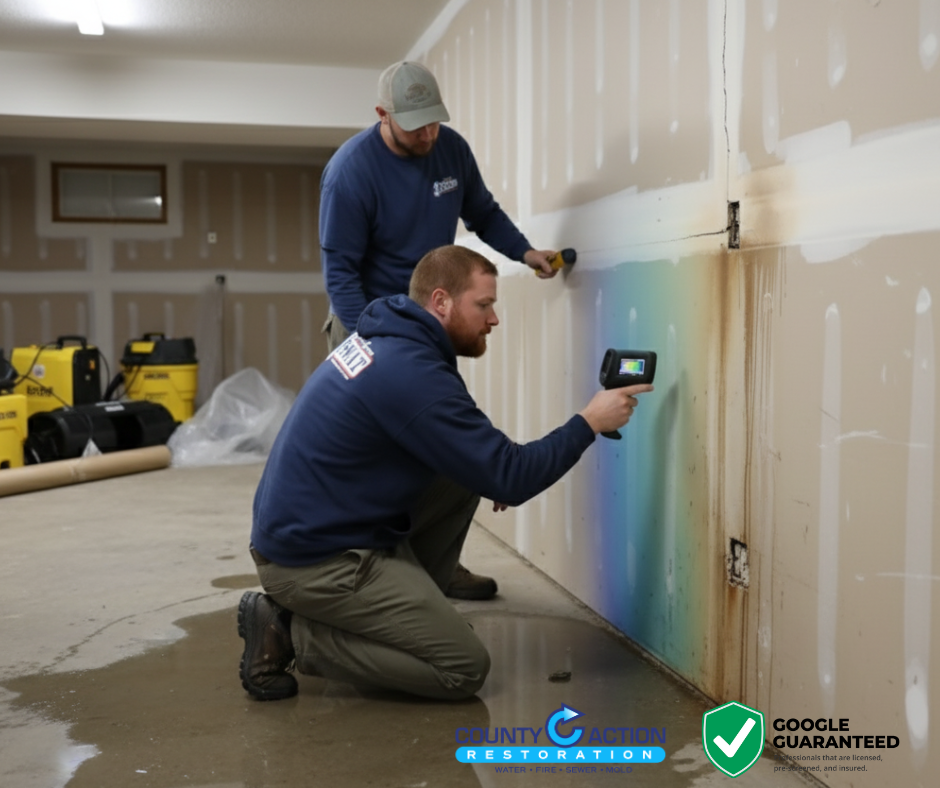
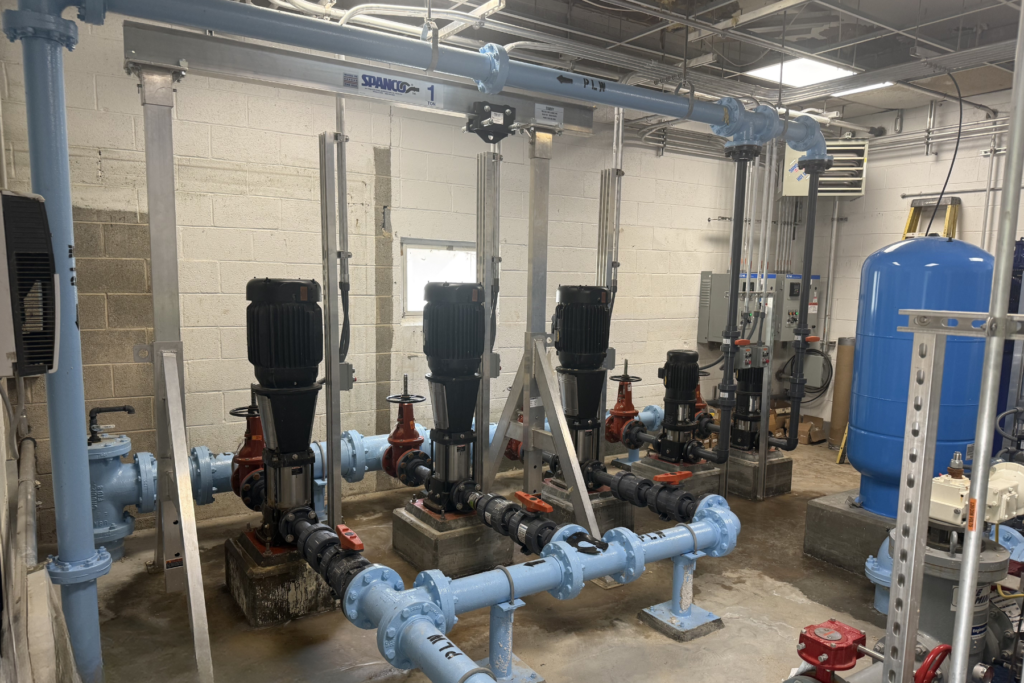
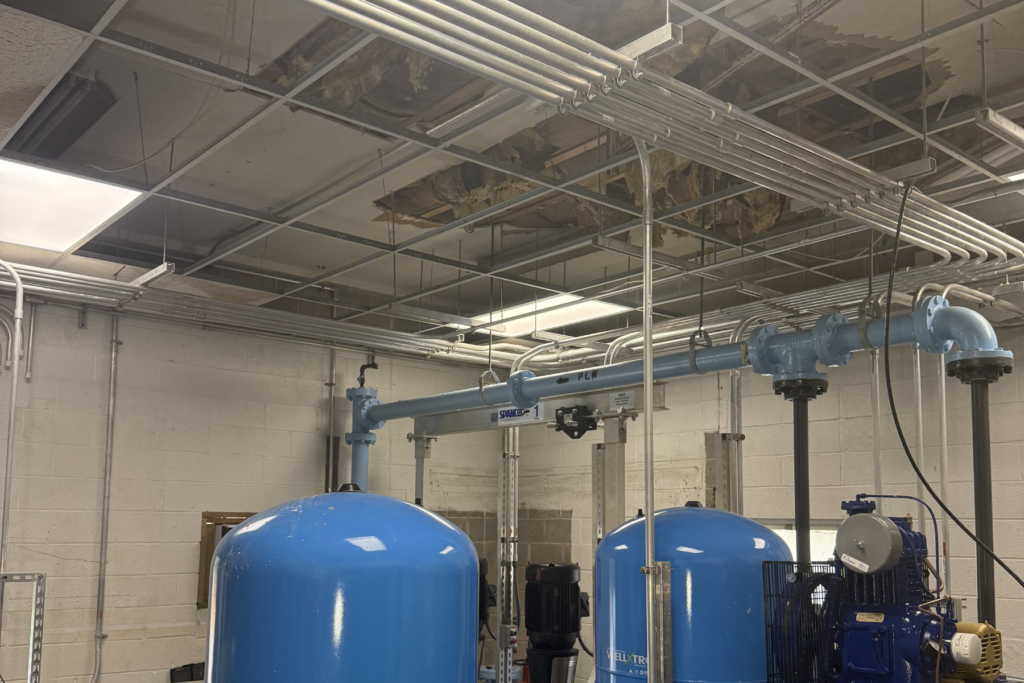
A critical pump room failure at a sewage treatment facility caused an explosion, leading to significant operational and safety challenges. Contaminated water breached the drop ceiling and insulation, resulting in severe mold growth and an immediate 25% reduction in the facility’s output.
Key Constraints
Several factors complicated the restoration project:
Operational Continuity: The building remained occupied, and critical operations had to continue alongside the mitigation and restoration work.
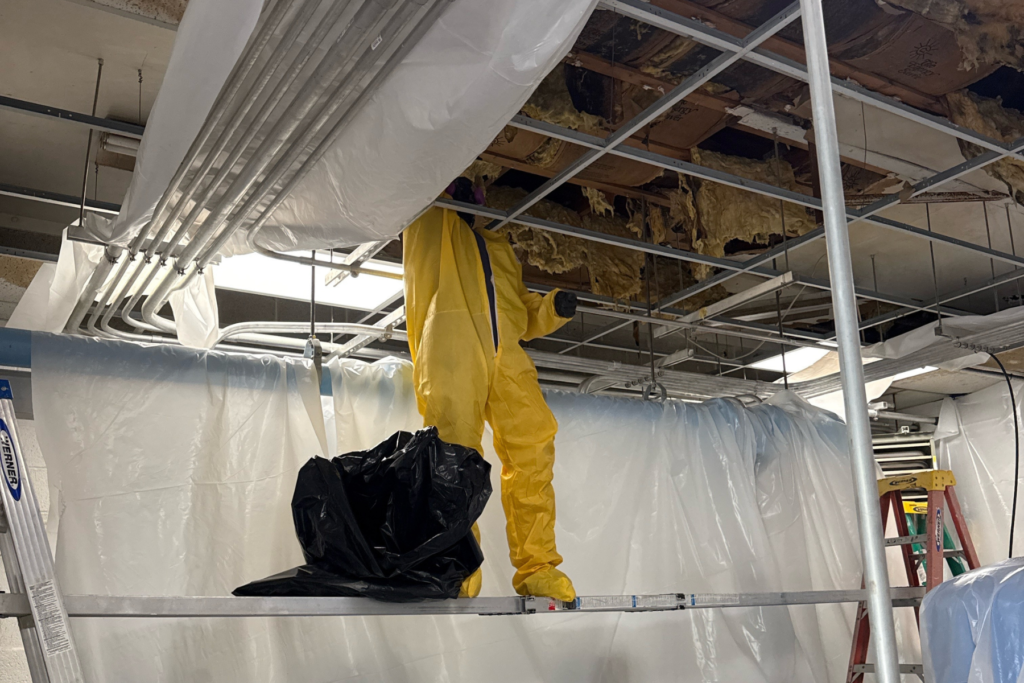
Access Challenges: The high ceilings required extensive scaffolding to access the damaged areas safely.
Hazardous Environment: Crews had to work amidst serious safety risks, including heavy sewer mud, stagnant wastewater, and compromised electrical systems.
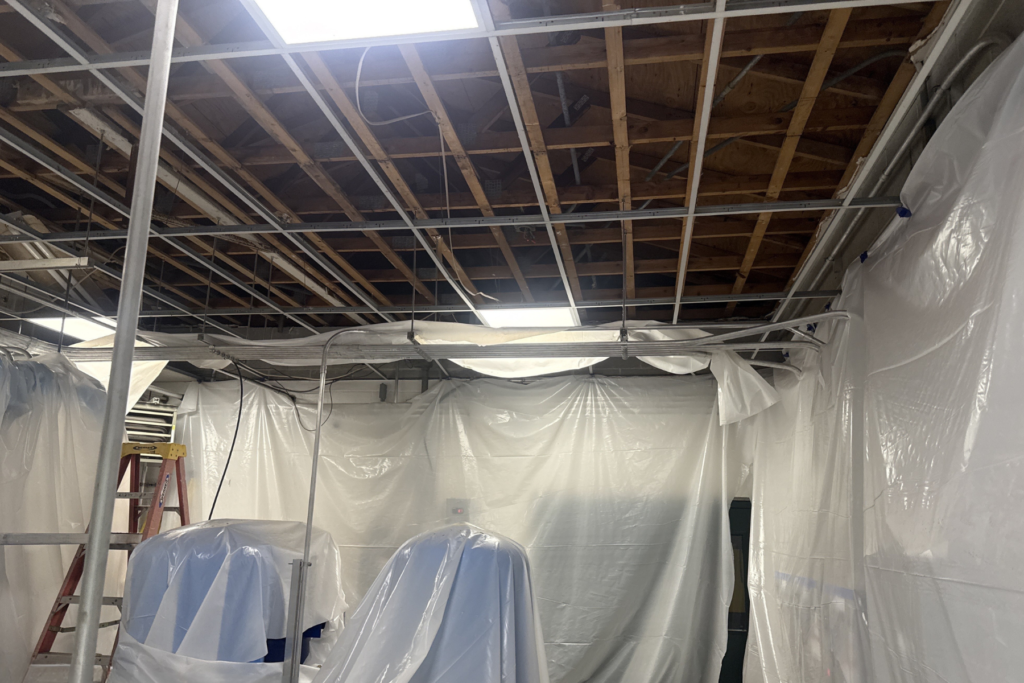
Containment Requirements: Specialized containment was necessary to protect active pumps and sensitive electrical components from dust and debris during the restoration process.
The Challenge
This project presented several complex technical and logistical challenges that required careful planning and execution.
Containment & Contamination Control
The primary challenge was maintaining a secure containment system throughout demolition and reconstruction. This was critical to prevent dust and contaminants from affecting ongoing facility operations, especially given the high 10-foot ceilings.
Severe Contamination
The event was classified as a Category 3 water loss, involving grossly contaminated water that posed significant health and safety risks to all personnel on-site.
Occupied Site Operations
All work had to be performed in an active facility, navigating around Aqua personnel and ensuring their critical operations were not disrupted.
Multi-Team Coordination
Success required seamless communication and collaboration between our team and key Aqua stakeholders, including the site manager, engineers, and technicians.
The Solution
Our approach prioritized the safety of on-site personnel while systematically addressing the contamination through a phased restoration process.
Restoration Process
The project followed a comprehensive lifecycle from initial response to final turnover:
Emergency Mitigation
Immediate stabilization of the site.
Documentation
Detailed logging of damage and site conditions.
Demolition
Safe removal of damaged construction materials.
Reconstruction
Rebuilding affected areas to original specifications.
Final Steps
Post-construction cleaning and a final walkthrough to ensure quality.
Key Equipment & Standards
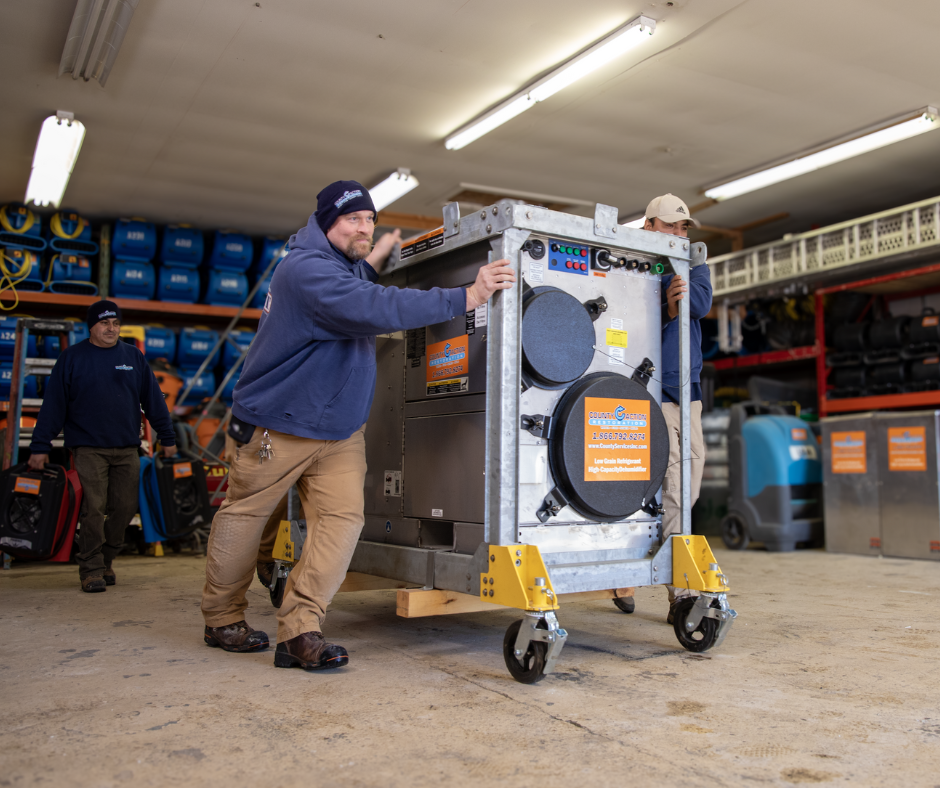
Equipment Deployed: We utilized negative air machines (air scrubbers) and advanced containment systems to control air quality and prevent cross-contamination.
Safety & Compliance: We maintained strict adherence to all S.H.E. (Safety, Health, and Environment) protocols.
Industry Standards: All operations complied with guidelines from the IICRC, RIA, and EPA.
Phasing Strategy
Our primary objective was to expedite the availability of premium units. To ensure an efficient turnover while minimizing risks like recontamination, we implemented the following strategic workflow:
Project Execution & Coordination
To ensure efficient operations and seamless collaboration with Aqua personnel, we implemented a focused execution plan characterized by specialized staffing and structured communication.
Team Composition
Leadership: Two team leaders oversaw all on-site activities.
Specialization: Two restoration technicians, holding both IICRC and RIA certifications, executed the technical work.
Work Schedule
The project was completed over a targeted three-day period, with crews working eight-hour daily shifts.
Communication Protocol
Stakeholder Engagement: We maintained close coordination with Aqua site managers, engineers, and technicians.
Daily Alignment: Morning meetings were held daily with the site manager and lead engineer to review progress and safety.
Documentation & Closeout
The project record included comprehensive photographic documentation and a final walkthrough to verify that all objectives were met.
The Outcome
We successfully delivered a swift and effective restoration, minimizing downtime and preventing any negative impact on facility operations.
Rapid Recovery
Normal operations were fully resumed within just three days.
Zero Disruption
The building remained operational and functional throughout the process, with no impact on adjacent pumping operations.
Effective Restoration
The property was restored to its pre-loss condition, with no secondary issues such as mold growth.
Insurance & Compliance Notes
This project was managed with a focus on meticulous documentation and adherence to all regulatory standards, even as a non-insurance-related loss.
Financial
The project was directly funded by the client without any insurance claim involvement.
Documentation
Comprehensive documentation was provided to the client for their records.
Quality Assurance
A final walkthrough was conducted with the site manager to ensure all work met their expectations.
Compliance
We secured confirmation that all restoration work was in full compliance with local building codes.
Visual Evidence
Key Takeaways
This project highlighted our ability to execute complex restoration projects in sensitive, operational environments without causing disruption.
Operational Continuity: We successfully completed the project with zero downtime for all other facility operations, ensuring business continuity.
Industrial Capability: This project demonstrated our capacity to manage restoration in large-scale industrial and utility settings.
Occupied Site Expertise: We proved our ability to work safely and efficiently in an occupied facility alongside client personnel.
Emergency Response: The rapid and successful outcome reaffirmed our readiness to handle critical infrastructure emergencies.