Project Type:Commercial Water Loss (Category 3 Water Damage)
Property Type:Commercial – Impacted areas include a hotel, a law firm office, and the Greater Philadelphia Chamber of Commerce, all located within the same building.
Location:Philadelphia, PA.
Client Type:Business.
Insurance Carrier:Self-pay.
Project Size:
7,000 sq. ft. of Class A office space
1,500 sq. ft. of law firm Class A office space
700 sq. ft. of elevator space
Multiple levels affected, spanning from the 7th floor to the 3rd floor, including common areas for the hotel
Timeline:10 Days.
Status:Completed.
The Situation
Background
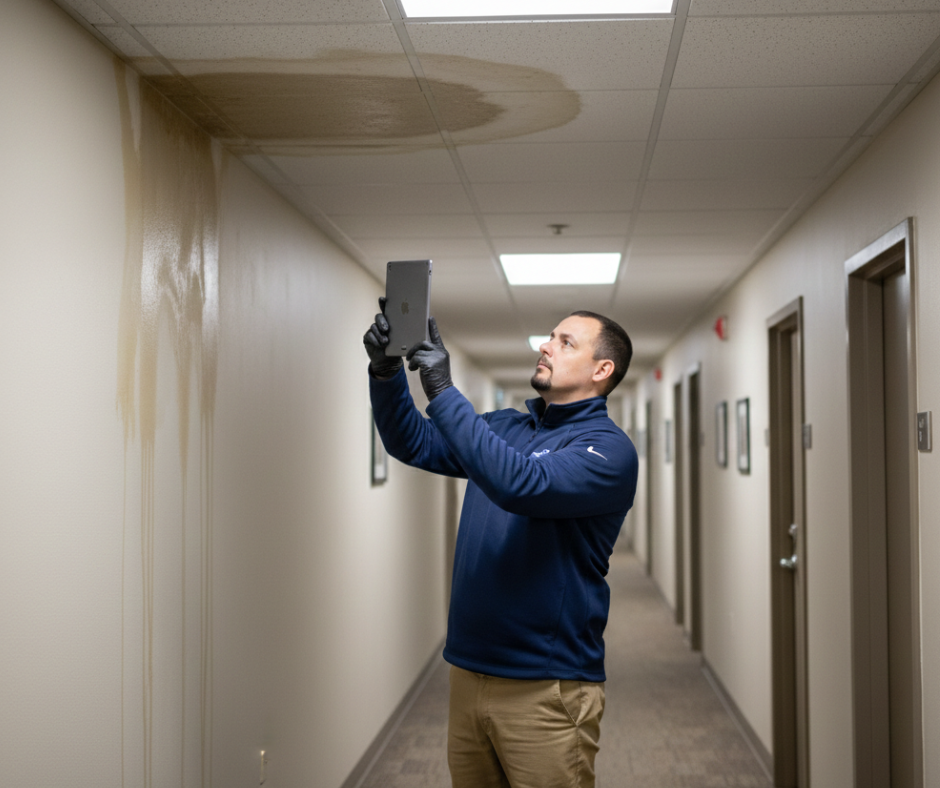
During construction on the 9th floor, a contractor accidentally struck a fire extinguishing water pipe system. This caused water to spread from the 8th floor down to the 2nd floor, affecting multiple offices, lobby areas, and businesses within the shared building. County Action Restoration was called in to perform emergency mitigation and cleanup. However, the restoration process itself was outside the scope of our work.
Key Constraints
Several challenges complicated the mitigation project:
Operational Continuity: The building remained occupied, requiring critical operations to continue uninterrupted while mitigation work was underway.
Access Challenges: Limited parking and unloading space created logistical issues. Additionally, hotel management requested minimal visibility of the mitigation process to avoid disrupting guests.
Hazardous Environment: The building’s age, outdated piping system, and the water from the fire extinguishing system posed risks. Tripping hazards were also a concern due to ongoing guest activity and the presence of other contractors involved in reconstruction.
The Challenge
This project involved several complex technical and logistical challenges that demanded meticulous planning and precise execution.
Containment & Contamination Control
The oily water from the fire extinguishing system posed a significant challenge, as it is much harder to remove from furniture and surfaces compared to regular water.
Occupied Site Operations
The hotel remained fully operational, with guests continuing to use amenities and move throughout the building, requiring careful coordination to minimize disruption and ensure safety.
Multi-Team Coordination
Multiple contractors, including IT Managed Services, were actively working on-site. Tasks included protecting sensitive documents and IT systems, as well as progressively restoring different areas as drying and cleaning were completed. This required seamless collaboration to maintain efficiency and avoid delays.
The Solution
Our approach focused on ensuring the safety of on-site personnel while systematically addressing contamination through a phased and efficient restoration process.
Mitigation Process
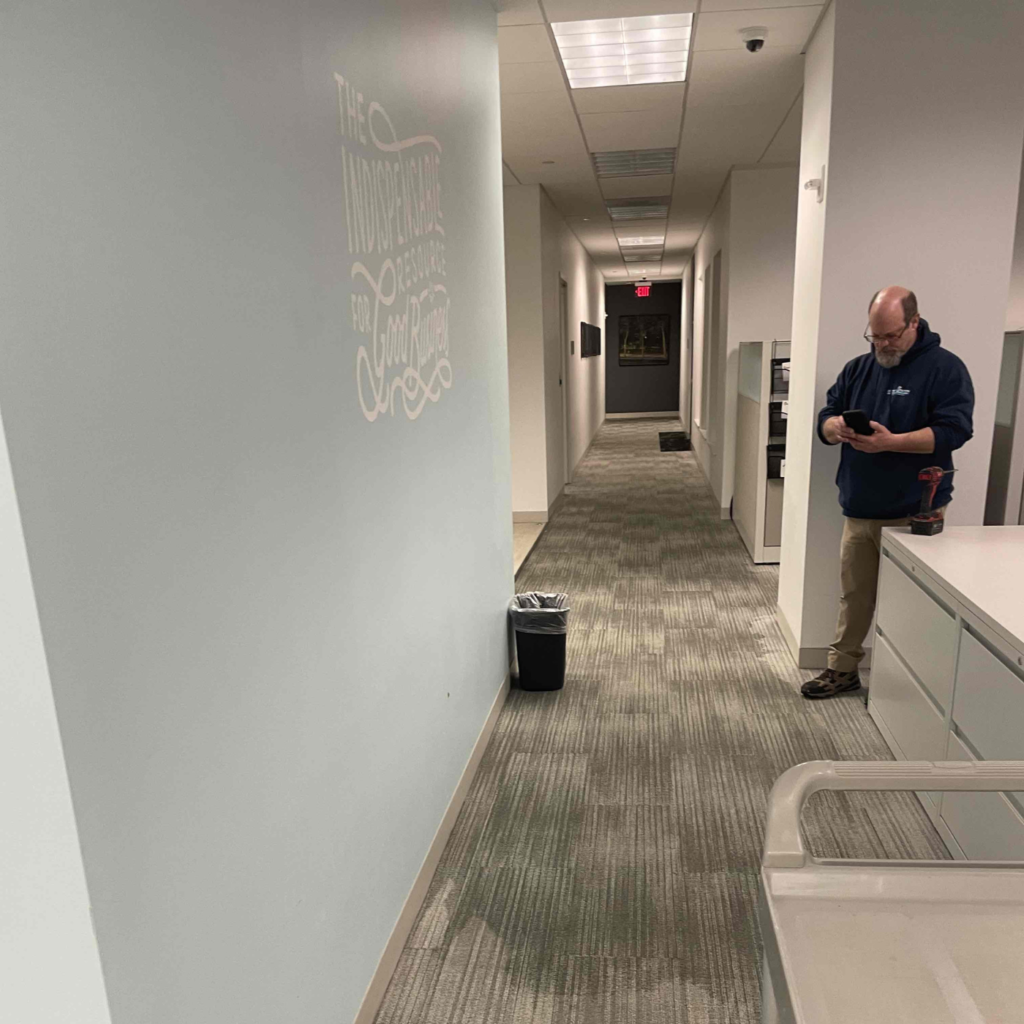
We began by accessing the most heavily impacted areas, where standing water, fallen ceiling tiles, and debris had accumulated. The process included:
Removing debris and saturated carpets.
Extracting standing water.
Drying and cleaning the affected areas.
Efficiently removing drying equipment to allow other contractors to resume their work and ensure smooth circulation for guests.
Key Equipment & Standards
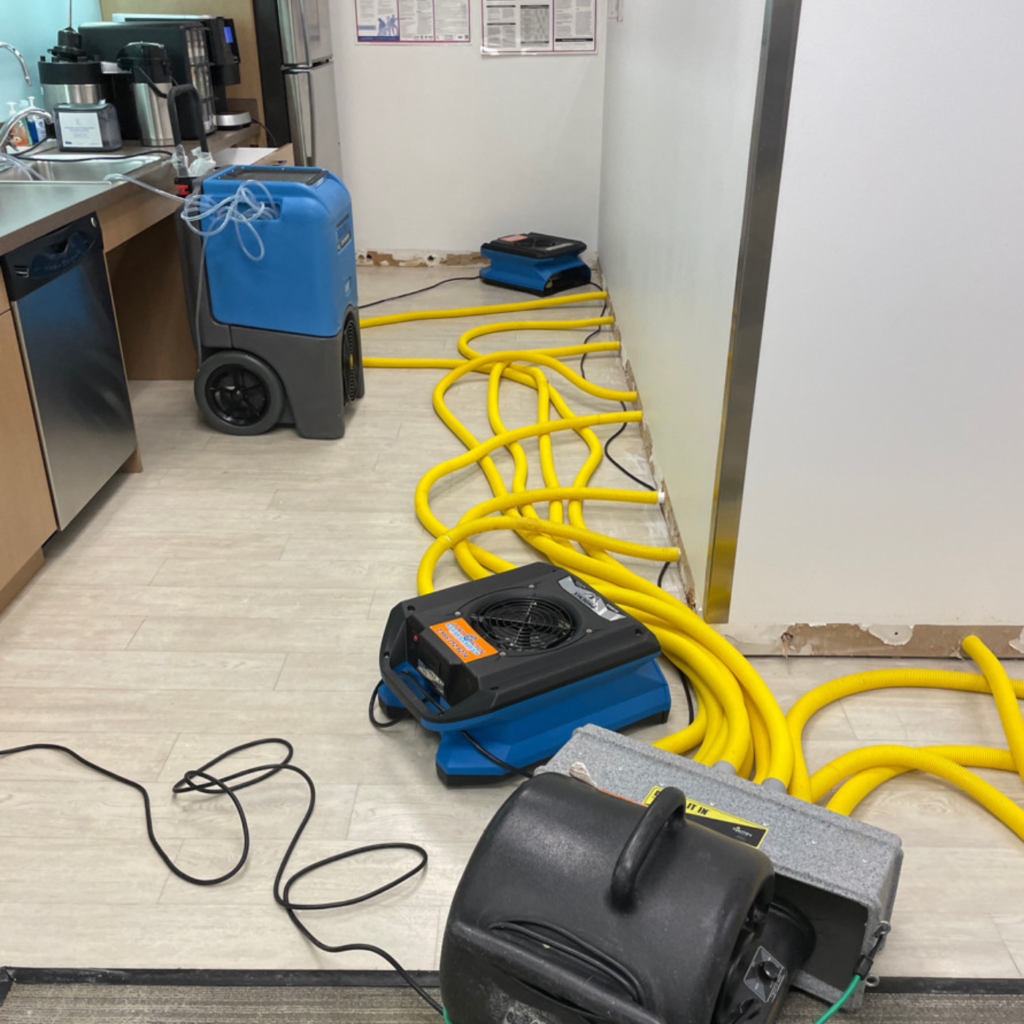
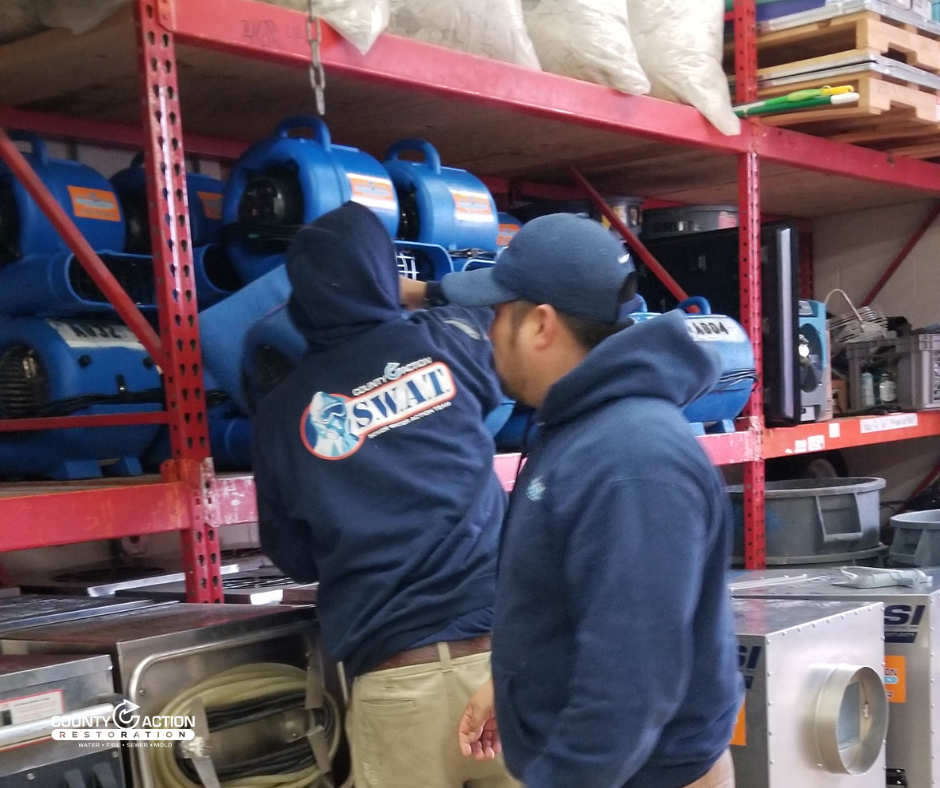
Equipment Deployed: We utilized negative portable water extractors, air scrubbers, air movers, dehumidifiers, and water accumulation buckets to effectively manage the mitigation process.
Safety & Compliance: Strict adherence to S.H.E. (Safety, Health, and Environment) protocols was maintained throughout the project.
Industry Standards: All operations were conducted in compliance with guidelines from the IICRC (Institute of Inspection, Cleaning and Restoration Certification), RIA (Restoration Industry Association), and EPA (Environmental Protection Agency).
Phasing Strategy
Due to the building’s ongoing activity, we implemented a targeted and sequenced approach:
Prioritized occupied spaces, such as the law firm and the Greater Philadelphia Chamber of Commerce (GPCC).
Addressed less occupied areas, including elevators and lobby spaces, afterward.
Focused on minimizing tripping hazards for people circulating in the building.
Adjusted to specific requests from the various entities within the building to ensure their needs were met.
Project Execution & Coordination
To ensure efficient operations and seamless collaboration, we implemented a focused execution plan with specialized staffing and structured communication.
Team Composition
Leadership: Two team leaders managed all on-site activities, ensuring smooth operations.
Specialization: Six certified restoration technicians (IICRC and RIA certified) handled the technical work, supported by five additional laborers for supplementary tasks.
Work Schedule
The schedule was objective-driven, ensuring tasks were completed efficiently and in alignment with project goals.
Communication Protocol
Stakeholder Engagement: We maintained close coordination with the Building Engineer and Building Manager, who facilitated efforts across all trades and parties involved.
Daily Alignment: Regular updates were provided through daily teleconferences to ensure all stakeholders were informed and aligned.
Documentation & Closeout
Comprehensive photographic documentation was maintained throughout the project.
A final walkthrough was conducted to verify that all objectives were met and the project was completed to satisfaction.
The Outcome
We successfully executed a swift and effective restoration, minimizing downtime and ensuring uninterrupted facility operations.
Drying Impacted Areas
All affected spaces were brought to a dry state, enabling general contractors to return and reinstall removed materials.
Comprehensive Documentation
Detailed records were provided to confirm that all areas were dried efficiently and met industry standards.
Preservation of Historical Materials
Historical building materials, particularly in the elevator area of the Bellevue Hotel, were carefully restored to a dry state without dismantling them.
Advanced Assessment Tools
Thermal imaging cameras and penetrating moisture readers were utilized to accurately assess and verify the level of dryness throughout the project.
Insurance & Compliance Notes
This project was managed with a strong emphasis on meticulous documentation and strict adherence to regulatory standards, despite being a non-insurance-related loss.
Financials
The project was directly funded by the contractor responsible for the leak.
Documentation
Comprehensive records were provided to the client, ensuring they had all the necessary documentation.
Quality Assurance
A final walkthrough was conducted with the site manager to confirm that all work met expectations and project objectives.
Compliance
All restoration work was verified to be in full compliance with local building codes, ensuring regulatory standards were upheld.
Visual Evidence
Key Takeaways
This project demonstrated our expertise in executing complex restoration efforts in sensitive, fully operational environments while minimizing disruption.
Effective Communication: Successfully managed multiple points of contact within a historical building and provided detailed updates to high-end tenants.
Dust Containment: Strategically opened specific areas to contain dust in the expansive hotel environment.
Logistical Coordination: Carefully planned and managed equipment loading/unloading to minimize impact on building operations and accommodate other contractors’ requests.
Discreet Operations: Maintained a low-profile presence in a high-profile, center-city high-rise to avoid raising concerns among guests.